Animal · Kenya, Tanzania, Botswana
African elephant
Loxodonta africana — the name this animal has in the language scientists everywhere share.
The African elephant is the largest land animal on Earth, living in family herds across the savannas of Africa. It uses its long trunk like a hand for almost everything it does.
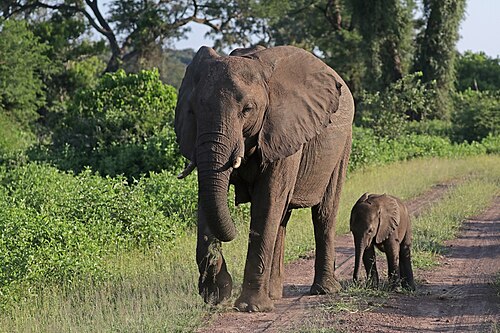
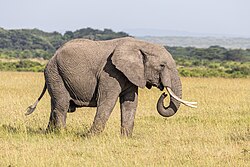
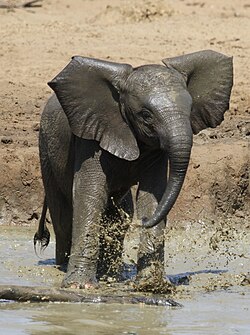
Picture credit: Charles J. Sharp (CC BY-SA 4.0) · Hobbyfotowiki (CC0) · Derek Keats (CC BY 2.0) · Wikimedia Commons
Where does the african elephant live?
Home: Savannas, grasslands and woodlands of eastern and southern Africa.
In the wild you find it in: Kenya, Tanzania, Botswana, South Africa, Zimbabwe, Namibia, Mozambique, Zambia.
Conservation status from the IUCN: endangered.
The short profile
Fully grown it measures up to 3.3 m tall at the shoulder. It weighs about 5 000 kilograms. On the menu: plants.
The story behind it
An elephant's trunk has no bones at all, yet it is strong enough to uproot a tree and gentle enough to pick up a single blueberry. Herds are led by the oldest female, called the matriarch, who remembers where to find water even during long droughts. Elephants eat up to 150 kg of grass, leaves and bark a day and spend most of their waking hours eating. They can also recognise themselves in a mirror and appear to mourn their dead. Poaching for ivory and shrinking habitat have pushed elephant numbers down sharply, so today they are officially endangered.
Find it on the globe
African elephant is there as a tiny animated figure that breathes and looks around. From far away the planet is only a blue ball; detail arrives as you zoom in, and this one appears once you are close enough. Open it on the globe.
It sits at its real coordinates, not near them — the same numbers listed in the facts above. Switch off the layer for this kind of place and it disappears again; the buttons for that are down the right-hand edge.
Questions children ask
Why do elephants have such big ears?
African elephants use their huge ears like natural fans to cool their blood on hot savannas. Flapping the ears helps release body heat, which is important since elephants have no sweat glands to cool down otherwise.
How long do elephants live?
Wild African elephants typically live 60 to 70 years, which is one of the longest lifespans of any land mammal. Their long life lets matriarchs pass on decades of knowledge about water and food to younger elephants.
Why are elephants endangered?
Elephants are endangered mainly because poachers hunt them illegally for their ivory tusks, and their grassland habitat is shrinking as land is used for farms and towns. Conservation parks and anti-poaching patrols now help protect remaining herds.
Where these numbers come from
Every figure on this page was checked against public reference sources before publication. Where sources genuinely disagree, the text says so.
Last checked: