River · China
Yangtze
The Yangtze is Asia's longest river, flowing entirely within China from icy Tibetan mountains to the busy port of Shanghai. Millions of people rely on it for water, farming, and transport.
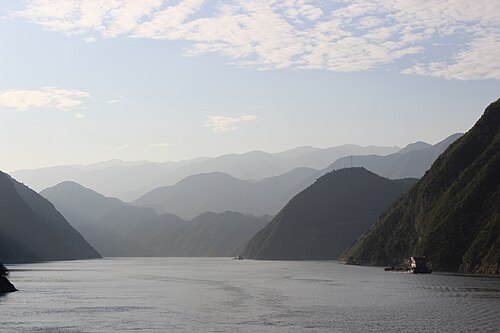
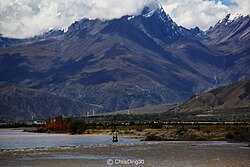

Picture credit: Ekem (CC BY-SA 4.0) · Chrisding30 (CC BY-SA 4.0) · David Crockett Graham (Public domain) · Wikimedia Commons
Where is Yangtze?
The river begins at Tanggula Mountains, Qinghai, China.
It ends in the East China Sea.
Along the way it passes: Tanggula Mountains (source) → Yushu, Qinghai → Shigu (First Bend), Yunnan → Lijiang area → Panzhihua, Sichuan → Yibin, Sichuan → Chongqing → Three Gorges Dam, Yichang → Jingzhou → Wuhan.
Countries on the river: China.
The story behind it
The Yangtze starts as glacier meltwater high on the Tibetan Plateau, then tumbles through deep gorges before spreading out across the fertile plains of eastern China. For thousands of years, farmers have grown rice in the wet fields along its middle and lower reaches, feeding a huge share of China's population. Near the city of Yichang stands the Three Gorges Dam, the largest hydroelectric power station ever built, holding back a reservoir that stretches for hundreds of kilometres. The river was once home to the Yangtze river dolphin, or baiji, but sadly it is now believed to be extinct, a reminder of how busy shipping and pollution can harm a great river. The endangered Chinese giant salamander, the world's largest amphibian, still hides in its cooler mountain tributaries.
Questions children ask
How long is the Yangtze River?
The Yangtze is about 6,300 kilometres long, making it the longest river in Asia and the third longest in the world. It flows entirely within China, from the Tibetan Plateau to the East China Sea.
What is the Three Gorges Dam?
The Three Gorges Dam near Yichang is the largest hydroelectric power station on Earth, built across the Yangtze River. It generates huge amounts of clean electricity but also changed the river's flow and flooded ancient towns.
Is the Yangtze river dolphin still alive?
The Yangtze river dolphin, called the baiji, has not been reliably seen since the early 2000s and is considered functionally extinct. Its disappearance is a warning about pollution and heavy ship traffic on busy rivers.
Where these numbers come from
Every figure on this page was checked against public reference sources before publication. Where sources genuinely disagree, the text says so.
Last checked: