River · Russia, Mongolia
Yenisei
The Yenisei flows north through Siberia in Russia, splitting the vast region roughly in half before pouring into the icy Arctic Ocean. It freezes solid for much of the long winter.
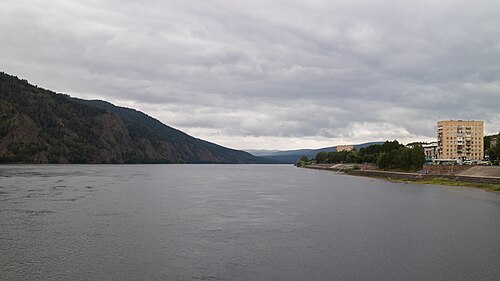
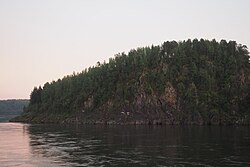
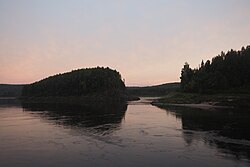
Picture credit: Vyacheslav Argenberg (CC BY 4.0) · Svetlov Artem (CC0) · Svetlov Artem (CC0) · Wikimedia Commons
Where is Yenisei?
The river begins at Eastern Sayan Mountains, near Mongolia border, Russia.
It ends in the Kara Sea (Arctic Ocean).
Along the way it passes: Eastern Sayan Mountains (headwaters) → Kyzyl, Tuva → Sayanogorsk → Abakan → Krasnoyarsk → Lesosibirsk → Strelka (Angara confluence) → Turukhansk → Igarka → Dudinka.
Countries on the river: Russia, Mongolia.
The story behind it
The Yenisei begins high in the mountains near Mongolia, where two smaller rivers meet at the Siberian city of Kyzyl to form its beginning. From there it flows steadily north for thousands of kilometres, past forests, dams and remote villages, before spilling into the freezing Kara Sea. Geographers often use the Yenisei as a rough dividing line between Western and Eastern Siberia, two enormous parts of Russia. For about half the year the river is locked under thick ice, so strong that trucks can safely drive across it, but every spring the breaking ice crashes and booms as the water surges free again. Sturgeon that can grow longer than a car still swim in its cold, clean waters, along with huge runs of migrating salmon.
Questions children ask
How long is the Yenisei River?
Including its longest headstream, the Yenisei system stretches about 5,539 kilometres, making it one of the ten longest rivers on Earth. It flows north from the mountains of Siberia into the Arctic Ocean.
Why does the Yenisei River freeze?
Siberia has extremely cold winters, often far below freezing for months at a time, which turns the Yenisei into thick ice from around November to May. In spring, the breaking ice can cause dramatic floods downstream.
What fish live in the Yenisei River?
The Yenisei is home to the Siberian sturgeon, a huge fish that can live for over sixty years and grow longer than a small car. Salmon, pike and grayling also swim in its cold, clean waters.
Where these numbers come from
Every figure on this page was checked against public reference sources before publication. Where sources genuinely disagree, the text says so.
Last checked: